Hygge in the Early Years
Have you ever visited somewhere new and felt it change the course of your life?
In October 2023, I took my husband to Copenhagen as a surprise for his fortieth birthday. I had never been to Denmark, or anywhere in Scandinavia, at that point. I had heard so many wonderful things about Copenhagen and was keen to discover more.
I think I fell in love with Copenhagen almost instantaneously. Its calm, laid-back atmosphere was unlike anywhere I had been before — not once did we hear a car horn or a siren blaring. Everyone cycles everywhere; there are no traffic jams or flashy cars, and everyone appeared relaxed and unhurried. We didn’t hear a single raised voice. There was also something deeper that I felt so strongly about Copenhagen — its energy. It felt safe. People were friendly, but more than that, there was an underlying sense of contentment. People seemed comfortable and genuinely happy.
Every school and nursery we walked past had children playing outside in their puddle suits, having the time of their lives. It was the kind of city I could easily imagine moving to. This experience prompted me to reflect on my own values and question what childhood should truly look and feel like.
When we returned home, I couldn’t shake the feeling of Copenhagen and felt compelled to learn more. A friend suggested The Year of Living Danishly by Helen Russell, a UK journalist who relocated to Denmark when her husband got a job at Lego HQ. Once I picked it up, I couldn’t put it down. As Helen explored what makes Denmark one of the happiest countries in the world, I found myself deeply questioning the pace and expectations I had accepted as ‘normal’ in the UK — both in life and in early years education.
The Danish approach to childhood resonated strongly with me. Work-life balance is protected. Children are encouraged to lead their own learning, largely outdoors — climbing trees and chopping wood long before they learn to read and write. Childhood is valued as a time for adventure, imagination, and freedom, rather than targets and tests. Community, trust, and connection are prioritised. It highlighted just how much pressure we place on children — and educators — within the UK system.
I then moved on to How to Raise a Viking, which had an even greater impact on me. It is the book I wish I had read at the very start of my parenting journey. It reinforced what I instinctively knew as an early years educator: children learn best through play, movement, exploration, and freedom. It also made me reflect on how easily childhood can be lost in a system driven by outcomes rather than a lifelong love of learning.
Keen to learn more — both for my own family and for my role as a Childminder — I enrolled in the Hygge in the Early Years accreditation. I wanted to explore how I could slow down my practice and create a calmer, gentler approach to learning, rooted in time outdoors, balance, and wellbeing. This decision marked the beginning of a journey that has profoundly reshaped both my professional practice and my personal life.
Through the Hygge accreditation, I began to gain the confidence to slow down — to trust myself, the children, and the learning process. I learned to truly observe how children play when given time, space, and freedom, particularly during our regular visits to the local nature reserve. I saw how deeply engaged they became when they were allowed to lead their own play. They didn’t need carefully curated resources or adult-led activities; they needed sticks, mud, hills to climb, and the freedom to explore their own capabilities. This experience reinforced my understanding that children do not need to be entertained — they need to be trusted as capable, curious learners.
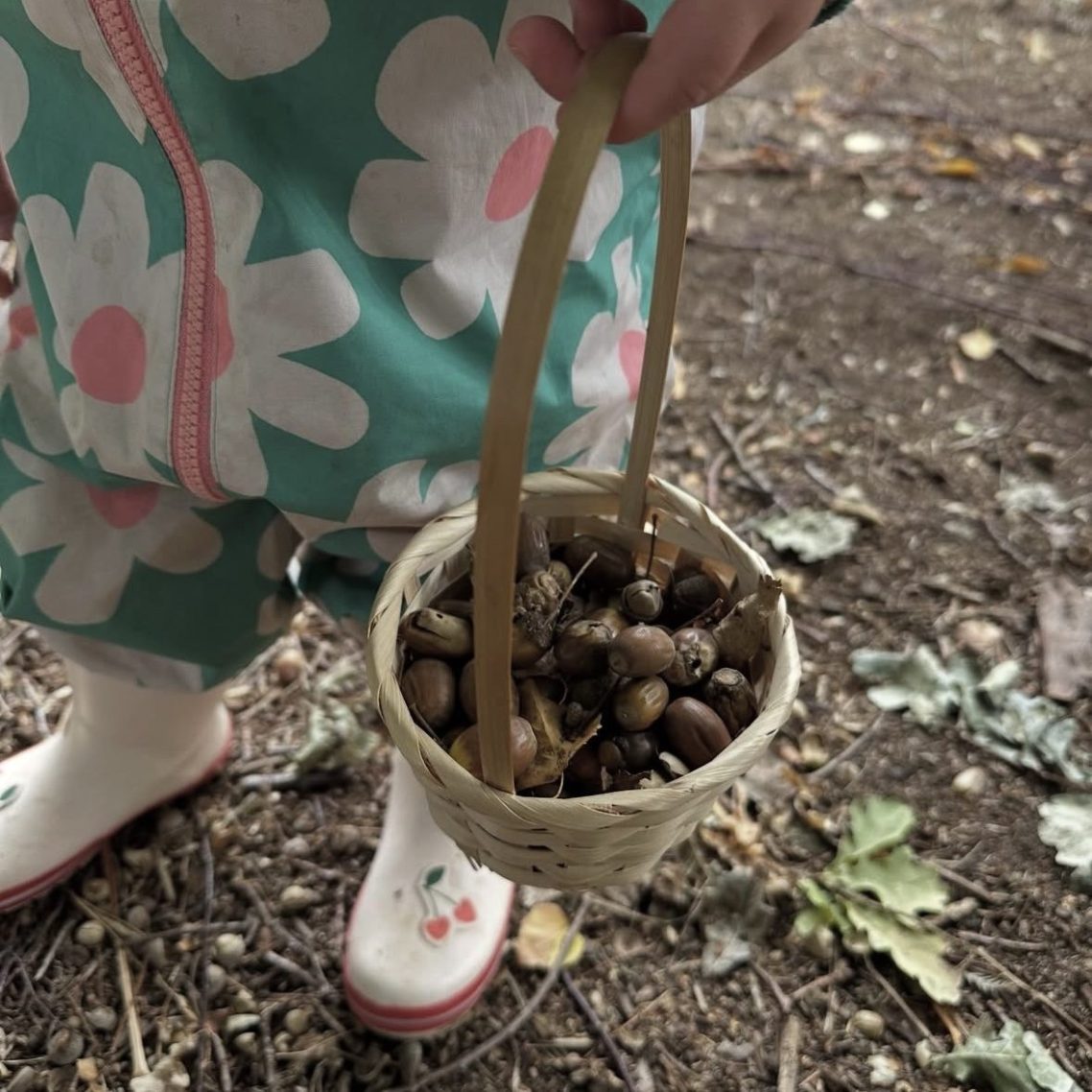
I began to recognise that nature provides everything children need to support their learning and development. Simple experiences — water play, collecting acorns, watching birds, noticing seasonal changes, painting sunflowers we had picked ourselves — consistently brought the most joy and depth to their play. This helped me shift my mindset from providing “more” resources to allowing more time.
As my confidence grew, I adapted my planning approach to be more responsive and in-the-moment. Rather than working to rigid weekly themes, I now place greater emphasis on following the children’s interests and curiosities as they naturally emerge. Learning continues to be carefully supported across all areas of development, in line with the EYFS, through ongoing observation, reflection, and intentional next steps. This approach allows learning to feel meaningful, purposeful, and deeply engaging.
Open-ended resources have become central to my practice. I love how readily children will pick up a stick and announce, “Here are your noodles for dinner.” I removed the plastic toy kitchen and food to observe how this might impact play, and the change was profound. Instead of conflicts over limited resources, children began collaborating — collecting loose parts, transporting materials, creating cakes, cups of tea, homes for squirrels, or magic wands. Their play became richer, more imaginative, and more sustained. This experience reshaped how I view resources — not as tools to direct play, but as invitations for creativity.
I have also made intentional changes to our playroom and mud kitchen by reducing plastic toys with limited play value and replacing them with open-ended resources and real-life utensils. I realised that I had already been instinctively drawn to many Hygge principles — soft lighting, natural materials, plants, neutral tones, and creating calm, cosy spaces. Hygge gave me the language and confidence to fully embrace this approach.
Through practice, I have learned that less truly is more. When too many resources were available, children felt overwhelmed and engagement was shallow. By carefully curating what is accessible, children now connect more deeply with their play, and the environment feels calmer and more inviting — for both the children and myself.
My Hygge journey has been about far more than environment or resources; it has strengthened my identity and confidence as an early years educator. It has taught me the value of slowing down, being present, embracing nature, and finding joy in simple moments — values I now intentionally model for the children in my care.
Our family’s continued travels through Scandinavia — including revisiting Denmark, experiencing a Finnish Christmas, and exploring the Norwegian fjords — have deepened my understanding of Nordic philosophies that align beautifully with Hygge. Concepts such as Sisu (inner strength and resilience), friluftsliv (life outdoors), and koselig (warmth, comfort, and togetherness) now underpin my approach to early years practice. These values are reflected daily through outdoor play, emotional resilience, strong relationships, and balanced routines.
Hygge also connects closely with the Swedish concept of lagom — the idea of “just the right amount.” Lagom encourages balance, sustainability, and consideration for others, values that strongly influence how I plan, teach, and live.
I feel that I am only at the beginning of what will be a lifelong journey of learning and living a Hygge-inspired life — one rooted in nature, togetherness, balance, and presence. I am deeply passionate about preserving childhood and championing the magic of play. As an early years educator, I see it as my responsibility to protect childhood, nurture joy, and create space for children to simply be.
Join Little Rainbows
"In the early years, it's the little moments of warmth, comfort and connection that matter most - a hygge inspired space where children can grow and belong."
Contact us
Little Rainbows is open;
Monday 8am - 5:30pm
Tuesday 8am - 5:30pm
Wednesday 8am - 5:30pm
All year (excuding personal holidays and Bank Holidays).
We accept Funding from 9 months -23 months and 2 year funding.
E-mail: littlerainbowsbiggleswade@outlook.com
Address: Biggleswade Bedfordshire
Follow us on Social Media: